A Surprise Pressure Wash Gives This LA Home a Fresh Start
Key Takeaways
Residential pressure washing in dry SoCal climates helps maintain the original color of stucco and prevents surfaces from dulling over time.
Soft wash stucco cleaning avoids damage and keeps the home’s exterior tone even and consistent instead of patchy or over-brightened.
Clearing cobweb buildup, concrete film, and outdoor furniture stains has a noticeable effect on curb appearance — the details shape how a home feels.
Patio and driveway pressure washing works best with even, controlled passes to avoid streaking and maintain a uniform surface tone.
Solar panel cleaning once or twice a year can improve light exposure and energy efficiency by up to ~15%, especially in areas with low rainfall and airborne dust.
I pulled up to a house in Del Rey, Los Angeles where Alex was waiting by the gate. He had booked a residential pressure washing service to clean the exterior walls, patio, driveway, gutters, solar panels, and outdoor furniture. Around here, where the sun is strong and rain is scarce, dust sticks. It settles into surfaces slowly, and before you know it, the house loses the light it once had. It happens to everyone.
Alex told me he wanted to surprise his girlfriend, Kathrin. Not a big remodel or anything dramatic — just getting the place back to how she remembered it. I hear that tone sometimes. Simple request on the surface, but there’s care underneath.
We checked the water source, made sure the pressure was stable, and walked the property together. I look at corners, fixtures, trim lines, stucco texture, how the patio drains, and where dirt settles. A house shows you where it needs help if you slow down long enough to see it.
The Before — What I Saw on Walkthrough
When we walked the property, I could see how time, dust, and sun had quietly settled into the home. This happens a lot in Southern California—with little rainfall, exterior surfaces simply don’t get rinsed. The change is slow, so homeowners don’t always notice it right away.
Here’s what stood out:
Cobweb buildup around the eaves and exterior light fixtures. Thin layers stacked over multiple seasons, making the lines around the roof look heavier and darker.
Stucco discoloration from fine dust settling into texture. The house was originally bright white, but it had shifted toward an off-white tone due to dust, crayon, and chalk writings, as well as paint.
Patio surface with a matte, dull film. Not slippery—just faded, like it had lost some life over time. And some acrylic paint stain.
Outdoor furniture with sun-set stains in the cushions and fabric. These were the kind that settle in—cleanable, but only with the right treatment.
A circular stain on the stucco wall, baked in from dried fruit. The edges and color made it clear. It had been there a while and would need careful removal to protect the wall’s finish.
“She always just complains about how dingy it looks. It’s kind of supposed to be a white house.”
— Alex
Nothing here was permanent or damaged. The structure was in good shape. It just needed routine cleaning to restore the original color and surface condition.
The Work — How I Cleaned Each Part of the Home
I worked through the home in a sequence that keeps clean surfaces clean, and prevents debris from being pushed back onto finished areas.
1. Exterior Walls (Stucco Soft Wash)
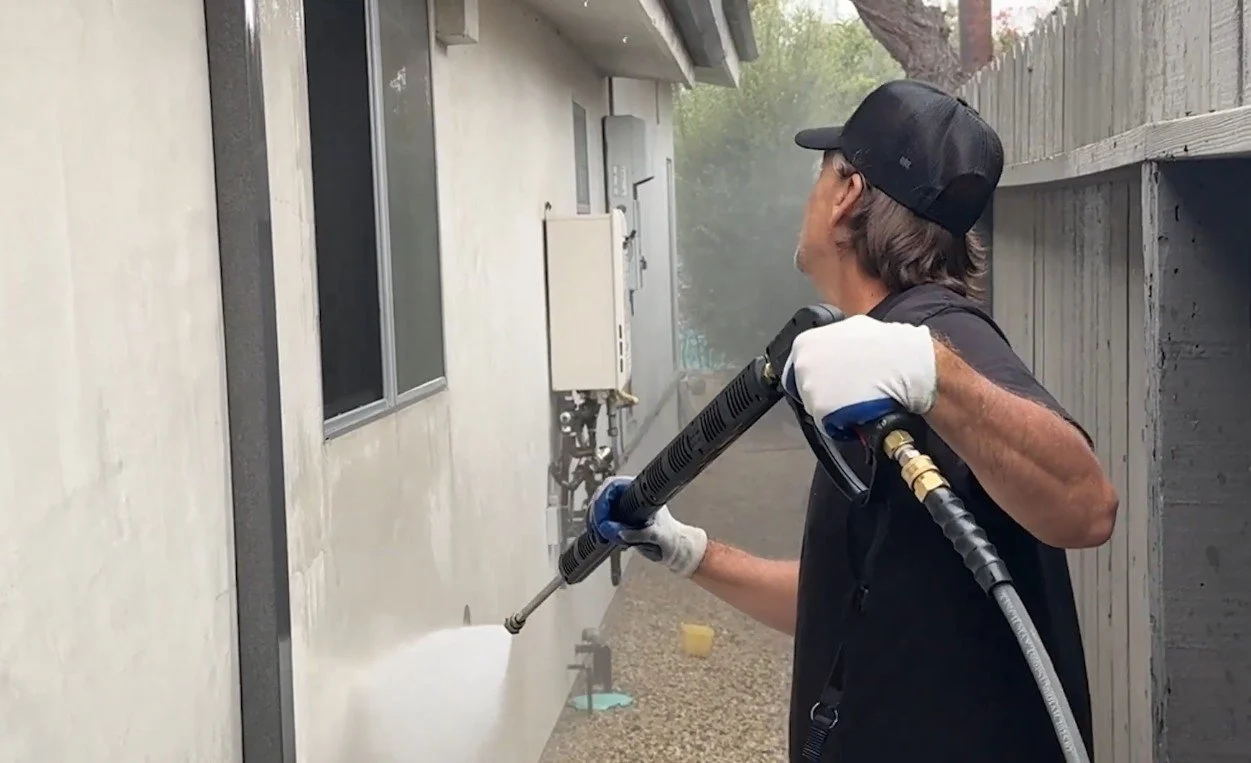
The house had a smooth finish stucco exterior, which needs controlled pressure.ure. I applied a low-pressure cleaning solution to loosen the dust that had settled into the texture of the walls. After giving it time to lift, I rinsed it with even, gentle pressure. This restored the original white tone of the home without scarring the stucco or creating blotchy patches.
Why it matters: This keeps the finish consistent and prevents the “patchy bright spots” that happen when stucco is over-washed.
2. Eaves and Exterior Light Fixtures (Cobweb + Dust Removal)
Cobwebs had collected in layers along the roofline and around the exterior light fixtures. I cleared the webbing first, then rinsed the areas where fine dust had settled underneath, which is what causes the darker shading near trim lines. These areas tend to collect debris faster than flat wall surfaces, so addressing them early keeps buildup from becoming more noticeable over time.
Why it matters: Removing cobweb buildup sharpens the outline of the house, improving curb appearance without any structural changes.
3. Patio Surface (Film Removal)
The patio had a dull film across the concrete. I cleaned the surface using long, consistent passes to avoid streaking. The concrete dried evenly and returned to a natural, clean finish — not overly bright or washed-out.
Why it matters: Even drying prevents obvious wash marks, which helps the patio look clean rather than “just pressure washed.”
4. Driveway (Following the Slope)
Residential driveway pressure washing is so much easier than doing Los Angeles parking lots. I followed the natural slope of the driveway as I washed it, pushing debris away from the house rather than redistributing it. Working with the grade ensures the surface dries at one consistent tone, which is what makes it look refreshed instead of striped.
Why it matters: Cleaning with the slope keeps the driveway uniform so it matches the rest of the exterior.
5. Outdoor Furniture (Fabric-Safe Stain Treatment)
The outdoor cushions had sun-set stains that had settled into the fibers. I used a fabric-safe stain treatment and a low-pressure rinse to lift the stains gradually. This keeps the color even across the fabric, so the cushions look cared for, not spot-treated.
Why it matters: This keeps the fabric color even and prevents the bright patch effect that happens when outdoor furniture is blasted with high pressure.
6. Stucco Wall Stain (Fruit Removal)
The “mystery” stain on the wall was dried fruit. Fruit leaves behind pigment and sugar, which bonds into stucco. Using high pressure would have etched the paint. I broke the stain down slowly in stages and rinsed it out so the wall tone stayed consistent with the rest of the house.
Why it matters: Slow removal preserves the surface match, so the cleaned area doesn’t stand out.
7. Gutters (Debris + Flow Clearing)
The gutters had collected leaves, dust, and settled debris in the channels. I cleared out the material by hand first to avoid pushing it into the downspouts, then rinsed the gutters to make sure water could flow cleanly. Most of the buildup was dry, which is common in areas with long stretches without rain, so it came out cleanly once loosened.
Why it matters: Clear gutters help prevent overflow staining on stucco and reduce the chance of water pooling near the foundation during rain.
8. Solar Panels (Dust Clearing for Efficiency)
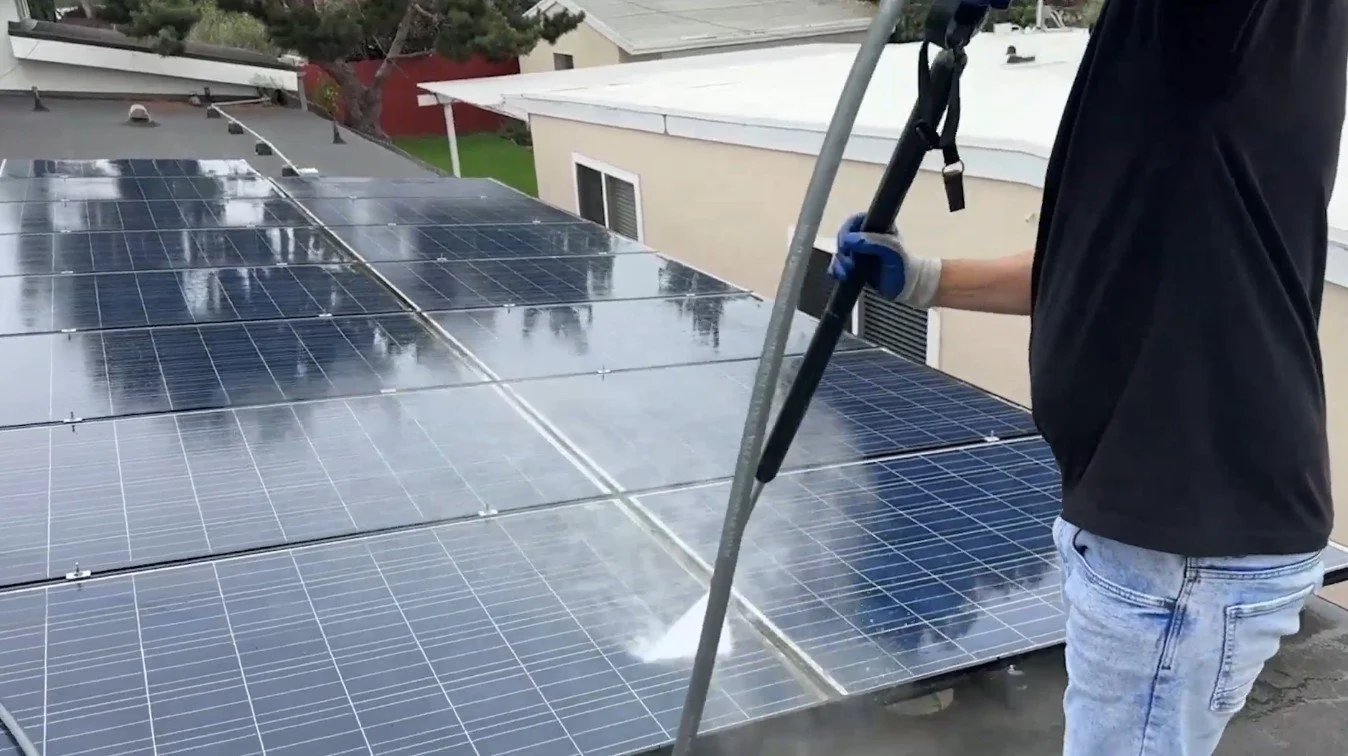
The panels had a layer of dust from the dry weather. Dust blocks sunlight before it reaches the cells, reducing output. A controlled rinse restores clarity to the panel surface. Cleaning solar panels once or twice a year in Southern California can help them run more efficiently because they get full light exposure again.
Why it matters: Cleaning solar panels once or twice a year in Southern California helps maintain energy efficiency, since panels rely on full light exposure to perform properly.
When everything dried, the house looked lighter and more defined. The surfaces matched, the lines were clean, and the exterior felt like it had its life back, not like it had been worked on.
The Reveal — Seeing the Change
Kathrin arrived just after the surfaces had dried. Before she walked up, she took a moment to look at the front of the house from the driveway. The brightness of the walls stood out immediately.
Alex walked her toward the entry. She looked over the walls, driveway, and patio first.
“Look at this. Look at the driveway. Look at all of it.”
— Kathrin
She checked the eaves and light fixtures next. The areas that had held layered cobwebs were now clear, and the trim lines looked sharp again.
Then she looked at the section of stucco where the fruit stain had been. She placed her hand on the wall and compared the cleaned area to the rest of the surface.
“This… I couldn’t get it off,” Kathrin pointed out.
— Kathrin
She checked the outdoor furniture and the patio surface next. The fabric no longer had the darker patches, and the concrete had its clean tone back.
Finally, she stepped back and looked at the house as a whole.
“Wow! My house looks really, really new.”
— Kathrin
She gave Alex a big hug. It was a straightforward thank you — the house looked the way she preferred it to look again. No explanation was needed. The change was visible.
Recommended Exterior Cleaning Schedule for Los Angeles Homes
In Southern California, the main factor affecting exterior appearance is dust accumulation. Because we go long stretches without rain, dust settles into stucco texture, along rooflines, and across patio and driveway surfaces. It doesn’t rinse away on its own, so the home gradually looks dull even when the materials are still in good shape.
Most homes do well with a once-a-year exterior cleaning, but certain property conditions can change the schedule:
Standard residential areas: 1× per year keeps the wall tone consistent and prevents buildup from settling in.
Homes near fields, hills, or construction: Every 6–8 months is useful because airborne dust is higher in these areas.
Homes closer to the beach: 1–2× per year helps manage salt and moisture film that settles faster.
Solar panels follow a similar pattern. Cleaning them once or twice per year helps maintain efficient light exposure. They don’t need special treatment — just dust removal so the panels can operate as intended.
Outdoor furniture and patios tend to show buildup sooner than walls because they collect foot traffic, runoff patterns, and everyday use. Cleaning these surfaces on the same schedule as the home keeps the overall appearance even, instead of having one clean area next to one that looks weathered.
The goal with maintenance in this climate is consistency. Light, periodic cleaning prevents the type of deep staining and material wear that requires more aggressive treatment later on.
If You’d Like Your Home Cleaned
If your home is starting to show dust buildup, cobweb layers, or surface dulling, you can reach out and I’ll take a look at what makes sense for your place. Whether you want to book a cleaning or just get a few questions answered, we’re glad to help. Contact us today!
Residential Pressure Washing: Common Questions Homeowners Ask
Will pressure washing damage stucco?
No. When done correctly using a soft wash approach, stucco can be cleaned safely without removing paint or roughening the surface.
Do I need to be home during the cleaning?
No. As long as there is access to a water source and any gates are unlocked, the cleaning can be completed without someone present.
How long does a standard residential cleaning take?
Most homes take 2–4 hours, depending on size and the amount of buildup.
Will cleaning remove all stains?
Most stains can be removed. Organic stains (like fruit or mildew) need staged cleaning to avoid changing the wall’s tone.
How often should I clean solar panels?
In Southern California, once or twice a year helps keep energy production consistent.
Can pressure washing clean outdoor furniture?
Yes, but outdoor fabrics should be cleaned using fabric-safe solutions and low pressure to avoid color fading or fiber damage.
What if I see some water near a window after cleaning?
Just wipe the interior edge with a towel. A small amount of water near window seals is normal after exterior washing.