Roof and Awning Pressure Washing in Los Angeles: Protecting Business Exteriors From Smog and Dust
Key Takeaways
• Roof and awning pressure washing in Los Angeles removes smog, dust, and airborne pollutants that settle on commercial buildings year-round.
• Regular cleaning helps prevent staining, material breakdown, and premature wear on fabric awnings and roofing surfaces.
• Soft washing methods are often required to clean roofs and awnings safely without damaging finishes.
• Businesses near busy streets are more exposed to vehicle exhaust, soot, and fine dust buildup.
• Facelift Pressure Washing helps Los Angeles businesses maintain clean, professional exteriors from top to bottom.
Roof and Awning Pressure Washing in Los Angeles: Protecting Business Exteriors From Smog and Dust
Most people look at a building from eye level. Sidewalks, entryways, and storefront glass get the attention. But if you step back and look at the full exterior, it is usually the upper sections that show wear first.
In Los Angeles, roofs and awnings quietly collect smog, dust, and airborne debris every single day. The buildup happens slowly, so it is easy to miss at first. Over time, though, it starts to show as fading, streaking, and uneven color across the building.
That is why roof and awning pressure washing in Los Angeles is not just cosmetic work, it is part of protecting the building itself. These surfaces take constant exposure from pollution and sun, and without proper cleaning, they age faster than the rest of the property.
Why Smog and Dust Build Up So Quickly in Los Angeles
Los Angeles has a combination of environmental factors that accelerate the buildup on exterior surfaces. Unlike areas with frequent rain, the city goes long stretches without natural rinsing, which allows particles to settle and stay in place.
Over time, roofs and awnings collect:
• Vehicle exhaust and soot from nearby roads and freeways
• Fine airborne dust that settles into surface textures
• Pollen and organic particles that cling to fabric and coatings
• Urban pollution that creates a dull, gray film over time
The result is not always obvious at first. Instead of sudden dirt, you get gradual fading, dark streaks, and uneven tone across the surface. Regular cleaning helps remove this layer before it becomes embedded.
Why Awning Cleaning Matters for Storefronts and Restaurants
Awnings sit right at the front of the business, often directly above the entrance. They frame the storefront, which means customers notice them immediately, even if only subconsciously.
What builds up on awnings
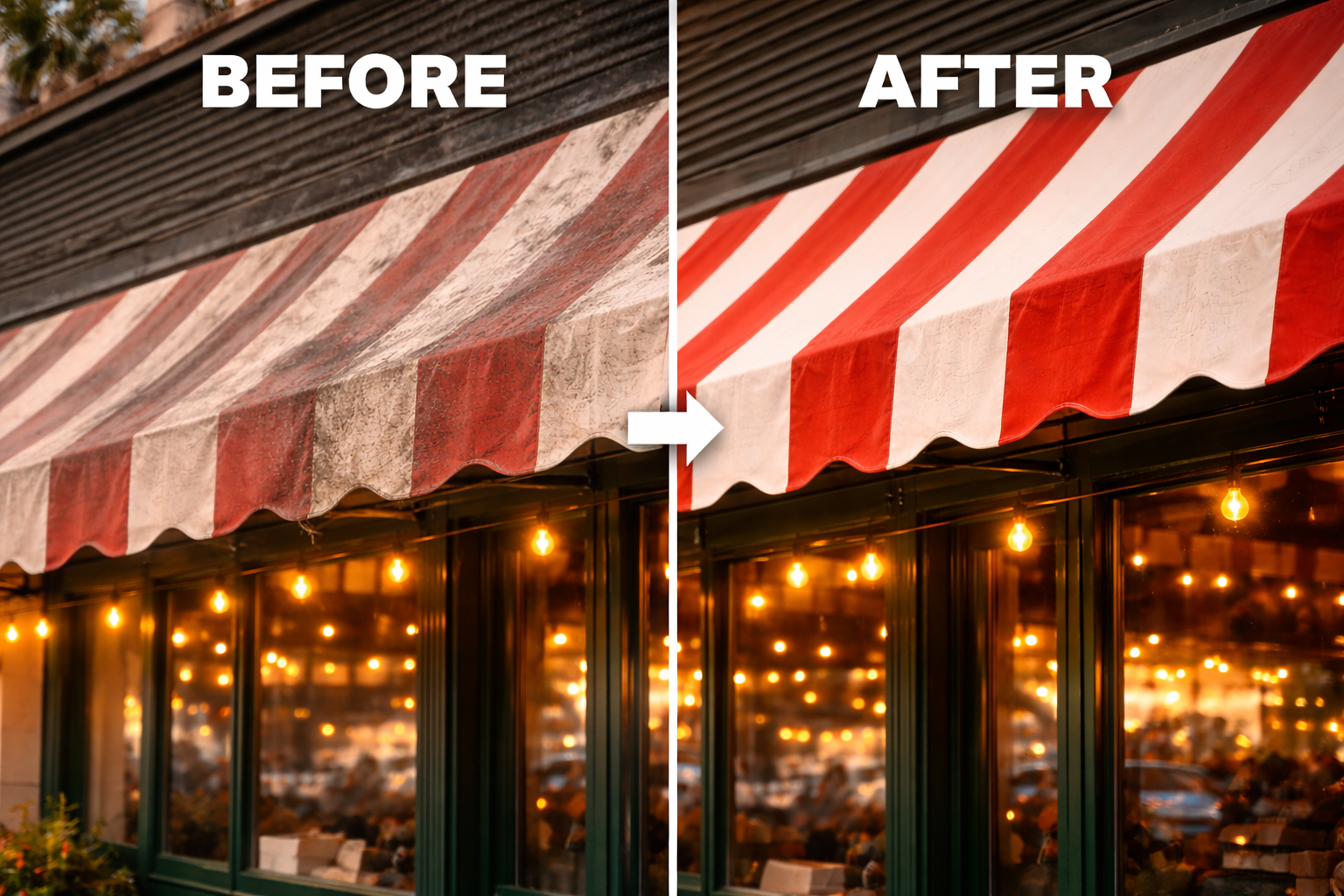
Awnings are constantly exposed to the elements, but unlike sidewalks, they are rarely cleaned as often. Because they sit above eye level, buildup can go unnoticed until discoloration becomes obvious. Over time, multiple layers of residue settle into the material, especially in high-traffic commercial areas.
1. Dust and smog that settle daily
Fine airborne particles from traffic and urban pollution land on awnings throughout the day. In Los Angeles, where rainfall is limited, this layer doesn’t wash away naturally. Instead, it accumulates and creates a dull, gray film that slowly changes the original color of the material.
2. Grease and smoke particles from nearby kitchens
Restaurants and food service businesses release small amounts of grease and smoke into the air. These particles travel farther than expected and cling to awnings, especially those positioned above outdoor seating or near ventilation systems. Over time, this creates sticky buildup that traps additional dust and leads to darker staining.
3. Water streaks from condensation or cleaning
Even occasional moisture can leave visible marks. Condensation, light rain, or inconsistent rinsing can cause water to run down the surface unevenly. As it dries, it leaves behind streak lines and mineral residue that make the awning look patchy or uneven.
4. General street grime from traffic and foot activity
Busy commercial areas generate constant movement, and that activity carries dirt, debris, and pollutants into the air. Awnings absorb this exposure over time, especially along major streets. This leads to a layered buildup of grime that makes the surface look aged even when the structure is still in good condition.
What happens if they are not cleaned
When left untreated, awnings start to show discoloration, uneven fading, and visible staining, especially on lighter fabrics. This affects how the entire storefront is perceived.
The right approach
Professional awning pressure washing in Los Angeles uses controlled, low-pressure cleaning methods to lift contaminants without damaging the material. The goal is to restore the original look without over-cleaning or weakening the fabric.
Roof Cleaning for Commercial Properties
Roofs are easy to ignore because they are not always visible from the ground. But they are constantly exposed to the same environmental conditions, often even more directly.
Common roof issues in Los Angeles
• Dust and debris settling into roofing materials
• Dark streaks caused by pollution and moisture patterns
• Organic buildup in shaded or low-drainage areas
• Accumulation around edges and drainage zones
Why this matters
Over time, these elements contribute to premature aging and uneven wear across the roof surface. Even if the structure is still sound, the appearance and performance can degrade faster than expected.
How it’s cleaned safely
Professional roof pressure washing in Los Angeles typically uses soft washing techniques. This involves:
Applying cleaning solutions to break down buildup
Using low pressure to rinse without damaging the surface
Cleaning evenly to avoid streaking or patchiness
This method protects the material while restoring a more consistent appearance.
Why Soft Washing Is Often the Better Option
Not every surface can handle traditional high-pressure cleaning. Roofs and awnings are two of the most common areas where using the wrong method can cause damage.
Soft washing focuses on cleaning without force, which is often the safer and more effective option.
Benefits of soft washing
• Protects delicate materials like fabric and coated surfaces
• Uses cleaning agents to break down contaminants at the source
• Prevents visible damage like streaking or fading
• Creates a more even and uniform finish
For commercial properties, this means you get a clean result without shortening the lifespan of the surface.
Signs It’s Time to Clean Roofs and Awnings
Because buildup happens gradually, it often goes unnoticed until it reaches a certain point. There are a few clear signs that indicate it is time to schedule cleaning.
Look for:
• A dull or faded appearance compared to the original color
• Dark streaks or patchy discoloration
• Visible dust or grime buildup
• Grease marks or staining on restaurant awnings
• Water streaks or uneven drying patterns
If these signs are present, it usually means contaminants have already settled into the surface and should be removed before they cause long-term damage.
How Often Should Roofs and Awnings Be Cleaned?
The frequency depends on location, exposure, and business type. Properties near busy streets or food service operations tend to accumulate buildup faster.
General guidelines
Retail and restaurant awnings
Every 3 to 6 months to maintain appearance and prevent stainingCommercial roofs
Once or twice per year depending on exposureHigh-traffic or high-pollution areas
More frequent cleaning may be needed to stay ahead of buildup
Consistency is more effective than waiting too long and needing more aggressive cleaning later.
The Long-Term Value of Roof and Awning Cleaning
While many business owners focus on appearance first, the bigger benefit is long-term protection.
Routine pressure washing in Los Angeles helps extend the life of exterior materials while maintaining a clean, consistent building appearance.
Over time, this leads to:
• Lower maintenance costs
• Fewer issues with permanent staining or damage
• A more professional and well-kept property image
• Better overall customer perception
The Bottom Line
Roofs and awnings are exposed to Los Angeles conditions every day, even when they are out of sight. Smog, dust, and environmental debris build up gradually, affecting both appearance and durability.
Regular roof and awning pressure washing in Los Angeles helps businesses maintain clean exteriors while protecting surfaces from long-term wear.
At Facelift Pressure Washing, we help commercial properties stay clean from top to bottom with cleaning methods designed for the local environment. Contact us today!