Warehouse Pressure Washing in Los Angeles: Cleaner Floors, Safer Work Environments
Key Takeaways
Warehouse pressure washing in Los Angeles removes oil, tire residue, dust, and industrial buildup that collect on concrete floors and loading areas.
Cleaner warehouse floors improve traction, visibility, and equipment safety in high-traffic work environments.
Professional pressure washing removes contaminants that sweeping and mopping leave behind.
Routine cleaning extends the life of concrete floors, loading docks, and warehouse infrastructure.
Maintaining clean warehouse surfaces helps support OSHA safety expectations and daily operational efficiency.
Why Warehouse Pressure Washing Matters in Los Angeles
Warehouses across Los Angeles operate in environments where activity never really stops. Forklifts move pallets across the floor all day, delivery trucks roll through loading docks, and large bay doors stay open for long periods of time. That constant movement brings dust, tire residue, and industrial debris into the building faster than most facility managers expect.
Over time those materials settle deep into the concrete surface. Sweeping and mopping help remove loose dirt, but they rarely address the heavier contaminants that bond to warehouse floors. Warehouse pressure washing in Los Angeles removes that deeper buildup so floors stay safer, brighter, and easier to maintain as operations continue.
A properly cleaned warehouse floor also changes the feel of the workspace. Lighting reflects better, markings become more visible, and equipment operators can move through the facility with greater traction and confidence.
The Most Common Warehouse Cleaning Challenges
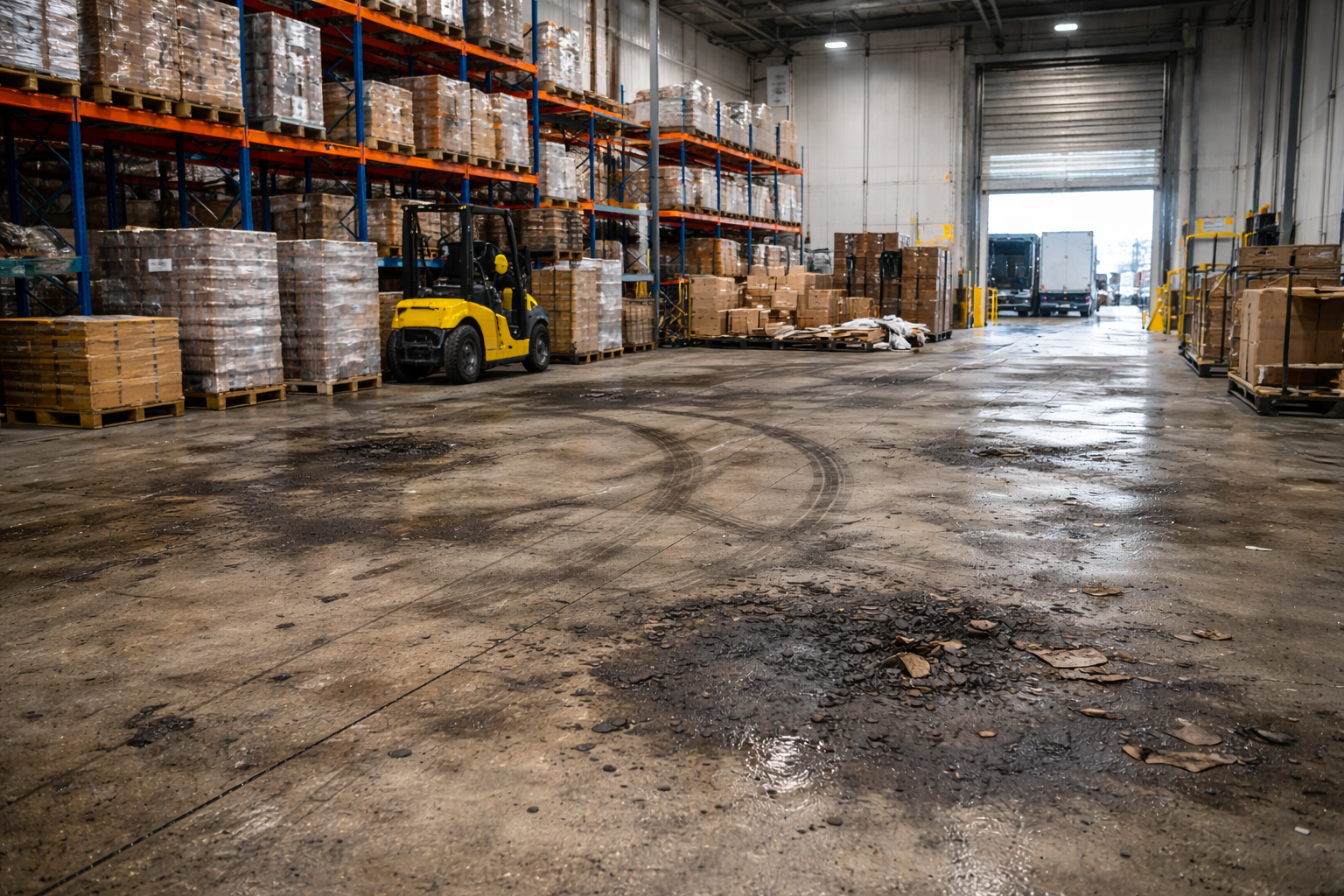
Industrial warehouses face a unique mix of contaminants that develop gradually through everyday work. Unlike offices or retail spaces, the surfaces inside a warehouse deal with heavy machinery, packaging debris, and vehicle traffic every single day.
Some of the most common cleaning challenges include:
Forklift tire residue that leaves dark marks and reduces floor traction
Oil and hydraulic fluid leaks from forklifts, trucks, and industrial equipment
Dust and packaging debris from pallets, cardboard, and shipping materials
Dirt tracked in from outdoor yards and loading areas
When these materials build up over time, they create a film on the floor that changes how the surface performs. Concrete becomes slicker, tire marks become permanent stains, and dust continues to circulate throughout the building. Routine warehouse pressure washing in Los Angeles helps remove these contaminants before they become long-term maintenance problems.
Key Areas of a Warehouse That Benefit from Pressure Washing
Certain parts of a warehouse experience heavier wear because of how operations move through the building. Focusing cleaning efforts on these areas helps improve safety and keeps the entire facility looking more consistent.
Warehouse floors
Warehouse floors carry the majority of forklift traffic and pallet movement, which means they accumulate tire residue, dust, and oil faster than any other surface in the building. Over time those materials settle into the pores of the concrete and darken the surface. Professional pressure washing lifts embedded residue and restores the floor so equipment can operate more safely across the facility.
Loading docks and truck bays
Loading docks are constant transition points between indoor and outdoor environments. Trucks bring in dirt from streets and yards while shipments leave behind packaging debris and fluid residue. Pressure washing these areas removes buildup that can create slippery conditions for workers handling deliveries.
Equipment staging areas
Forklifts, pallet jacks, and industrial equipment often sit in designated staging zones when not in use. These spots tend to accumulate oil spots, tire marks, and grease residue that gradually spread across the surrounding floor. Pressure washing helps remove these contaminants and keeps equipment areas safer for operators.
Exterior warehouse entrances
Exterior entryways and bay door areas are often the first places where dirt enters the warehouse. When trucks drive in and out throughout the day, they carry dust and debris directly onto interior floors. Cleaning these entry areas regularly reduces how much contamination spreads deeper into the building.
Walkways and safety zones
Many warehouses designate pedestrian walkways and safety lanes to separate employees from forklift traffic. Dust and debris can obscure these markings over time, making them harder to see. Pressure washing keeps these zones visible and reinforces safe movement patterns inside the facility.
How Professional Warehouse Pressure Washing Works
Cleaning a warehouse properly requires more than simply spraying water across the floor. Industrial facilities contain different surfaces, equipment zones, and traffic patterns that must be considered before work begins.
Our warehouse pressure washing process typically includes several steps designed to clean thoroughly while protecting the building and its operations.
Initial facility assessment
Before starting, we review the warehouse layout and identify high-traffic areas such as loading docks, forklift lanes, and staging zones. Understanding how the facility operates allows us to plan a cleaning process that addresses the dirtiest areas first without disrupting workflow.
Pre-treatment for oil and industrial residue
Oil stains, grease, and hydraulic fluids require specialized degreasers before pressure washing begins. These detergents break down contaminants so they can be lifted from the concrete surface rather than simply spread across the floor.
Hot water pressure washing for deep cleaning
Hot water systems are particularly effective in warehouse environments because they dissolve grease and industrial residue faster than cold water. The heat allows contaminants to release from the concrete pores so the floor can be cleaned thoroughly.
Controlled surface cleaning techniques
Large warehouse floors must be cleaned using consistent, overlapping passes. This prevents streaks or uneven sections and ensures the concrete dries with a uniform appearance across the building.
Final inspection and spot treatment
After the primary cleaning is finished, remaining stains or problem areas are treated again. This step ensures the floor is evenly cleaned and that high-traffic zones receive the extra attention they require.
Using a structured process like this allows warehouse pressure washing in Los Angeles to produce reliable results without interfering with daily operations.
Safety Benefits of Warehouse Pressure Washing
Clean warehouse floors are an important part of maintaining a safe work environment. When oil, dust, and residue build up on concrete, they reduce traction for both employees and equipment operators. This can increase the risk of slips, falls, and equipment control issues.
Regular pressure washing improves traction and removes contaminants that create hazards. It also helps keep pedestrian walkways visible and prevents debris from circulating through the air as forklifts move around the facility.
Another advantage is improved lighting. Clean concrete reflects light more effectively than dusty or stained floors, which can make large warehouse spaces feel brighter and easier to navigate.
Establishing a Cleaning Schedule for Industrial Facilities
The ideal cleaning schedule for a warehouse depends largely on the level of activity inside the building. Facilities with constant forklift traffic or heavy shipping operations tend to accumulate contaminants faster than lower-traffic storage spaces.
Typical schedules include:
High-traffic distribution centers — quarterly pressure washing
Moderate warehouse operations — two to three cleanings per year
Facilities with heavy machinery or oil exposure — periodic spot cleaning for staging areas and loading zones
Maintaining a consistent cleaning schedule prevents buildup from becoming permanent and keeps the warehouse easier to maintain over time.
The Bottom Line
Warehouses are designed to support constant movement of goods and equipment, but that activity leaves behind dust, oil, and tire residue that gradually affect the building’s surfaces. Without regular cleaning, these contaminants accumulate in ways that impact both safety and long-term maintenance costs.
Warehouse pressure washing in Los Angeles helps industrial facilities maintain cleaner floors, safer working environments, and better-performing concrete surfaces. Removing embedded debris allows equipment to operate more smoothly and helps warehouses remain functional, professional workspaces.
At Facelift Pressure Washing, we work with warehouses and industrial facilities across Los Angeles to maintain clean floors, safe loading areas, and reliable exterior surfaces that support day-to-day operations. Need a cleaner and safer warehouse? Contact us today!
FAQs About Warehouse Pressure Washing in Los Angeles
How often should warehouses be pressure washed?
Most warehouses benefit from professional pressure washing two to four times per year, depending on traffic and equipment activity. Facilities with heavy forklift use or oil exposure may require more frequent cleaning.
Is pressure washing safe for warehouse concrete floors?
Yes. When performed correctly with controlled pressure and proper detergents, pressure washing removes contaminants without damaging concrete surfaces.
Can pressure washing remove forklift tire marks and oil stains?
Professional equipment and degreasers can break down tire residue and oil that normal cleaning methods cannot remove. Results depend on how long the stains have been present.
Will warehouse pressure washing interrupt operations?
Most cleaning can be scheduled during off-hours or low-activity periods. Professional crews coordinate with facility managers to minimize disruptions.
Does pressure washing help improve warehouse safety?
Yes. Removing oil, dust, and residue improves traction and reduces slip hazards for both employees and equipment operators.